Boosting Lead Conversion in Salesforce Account Engagement

To improve lead and sales conversions in Salesforce Account Engagement, focus on three core areas: clean data and strong integrations, shared lifecycle stages between marketing and sales, and targeted nurture journeys in Engagement Studio. Reliable field mappings, consistent scoring and grading, and a smooth automated handoff help ensure leads reach sales at the right moment. Combined with personalisation, intent signals, and clear reporting in Salesforce, these steps create a predictable, measurable path to higher conversion rates.

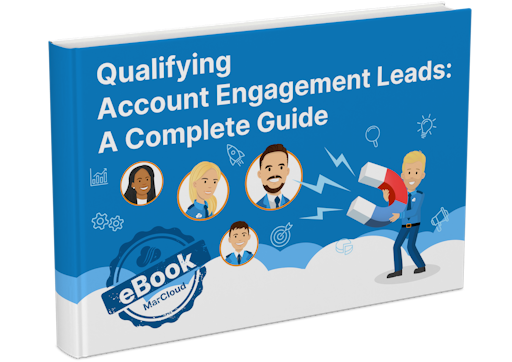
3D eBook cover with text Qualifying Pardot Leads: A Complete Guide
Free ResourceDownload now

Improving lead and sales conversions in Salesforce Account Engagement isn’t a quick configuration change or a single clever Engagement Studio. If it were, every marketing manager would already be hitting their targets and reporting flawless attribution in Salesforce dashboards!

The real driver of higher conversion rates is a combination of strategy, data foundations, technical configuration, and team alignment. It’s the whole system working together, and for marketing managers and directors who need to prove marketing ROI, secure budget, and avoid firefighting technical issues, it’s the holy grail of Salesforce automation. 

Reliable lead conversion in Salesforce Account Engagement helps you communicate your impact clearly, and it ensures the sales team receives better-qualified leads at the right time.

Here are the strategies and tools that make the biggest difference, based on years of supporting enterprise clients in delivering greater ROI from Salesforce marketing activities.

Where low lead conversion in Salesforce starts

When teams feel lead conversion is lower than it should be, they often look first to the nurture journeys running in Account Engagement, or they assume the marketing-to-sales handoff process needs tightening. Often, both of these are true. But more often, conversion rate is hampered by hidden factors.

For example:

  • A lead score is increasing, but important fields aren’t syncing to Salesforce.

  • Sales are receiving leads without context because Engagement History isn’t set up properly.

  • The lifecycle definition is unclear, so marketing and sales interpret “MQL” differently.

  • Nurture studios are running, but the segmentation behind them is limited by inconsistent or dirty data.

Conversion issues surface later, but their cause is usually a mix of strategic and technical gaps. That’s why improving lead conversion in Salesforce is most effective when you approach it holistically.

1. Fix the foundations first

Before you jump into optimising campaigns or rebuilding nurture programs, it’s worth ensuring the data layer behind Account Engagement is strong enough to power reliable segmentation, personalisation, and reporting.

Syncing Salesforce & Account Engagement properly

The Salesforce to Account Engagement sync is designed to work seamlessly, but in most long-cycle B2B organisations, the sync setup needs a bit of attention and has a bigger impact on conversions than expected.

A few essentials:

  • Field definitions must support both scoring and grading.

  • A clear owner field helps avoid delays in assignment.

  • Sync behaviour should protect data quality rather than overwrite it.

  • Prospect records need accurate lifecycle data to trigger the right automation.

If the data isn’t flowing cleanly between platforms, segmentation becomes limited, and sales teams struggle to understand where a lead came from or what they engaged with.

Build a reliable and clean database

Consistent lead source data, meaningful UTMs, and a logical Salesforce Campaign Hierarchy all contribute to the same goal: a clear picture of what influenced a conversion.

This is especially important for marketing leaders who need to demonstrate ROI. Without reliable campaign tracking, attribution is all guesswork, which can make budget conversations harder than they need to be.

How better integrations improve lead conversion

Integrations with events platforms, paid media, webinars, customer data tools, and other marketing systems can significantly improve conversion rates by consolidating behavioural and demographic data.

The more complete your customer view, the better you can segment. And the better you can segment, the more relevant your messages become. This is the groundwork behind every effective nurture and every well-timed sales follow-up.

Expert tip: If you haven’t already, check out Salesforce Data Cloud.

2. Align Sales & Marketing to increase lead conversion

A technically strong system can still struggle if the teams using it aren’t aligned. Sales and marketing alignment isn’t simply scheduling regular catch-ups or building shared dashboards. You also need shared definitions and a handoff process that everyone trusts.

Shared definitions: What are MQL, SAL, and SQL?

Most businesses have lifecycle stages written somewhere, but the more important question is whether those definitions are being used consistently. If one team believes a marketing-qualified lead (MQL) has demonstrated intent, and the other sees it as early-stage interest, leads will move through the system unevenly, and you’ll get friction between departments. 

The same logic applies to sales-accepted leads (SAL) and sales-qualified leads (SQL). Clear definitions give both teams confidence. Marketing knows when to hand off. Sales know when to engage. And Salesforce reporting becomes a lot more reliable.

Score & Grade intentionally

Account Engagement scoring and grading are powerful, but only when they reflect your actual buying journey.

Common issues include:

  • Overvaluing early-stage engagement results in premature handoff.

  • Using the default scoring model without customising it to the business.

  • Relying heavily on score increases without factoring in fit or buying cycle length.

A strong model uses both behaviour (score) and fit (grade) to decide when a lead is genuinely ready for sales. This directly influences lead conversion in Salesforce because it reduces the volume of low-quality leads and increases the focus on prospects who are displaying genuine intent.

Create a smooth automated handoff process

A clear automated handoff helps remove delays, reduces manual work, and ensures sales receive the context they need. This usually includes:

When the handoff is working properly, sales can act quickly, and marketing can report on conversions confidently. Both matter for ROI.

Free Qualifying Leads eBook

When it comes to taking your marketing and sales efforts up a notch, it’s vital to understand different types of leads, how to define and qualify them, and why it matters!

  • Defining leads
  • Automating lead qualification
  • Progressive profiling
  • Scoring & grading
  • Lead generation forms
  • Types of leads
Download Qualifying Pardot Leads eBook
3D eBook cover with text Qualifying Pardot Leads: A Complete Guide

3. Use Engagement Studio for timely conversion

Engagement Studio is often seen as the centrepiece of Account Engagement. It can certainly play a big role in lifting conversions, but it works best when the foundations above are in place.

Nurture studios that influence revenue

High-performing nurture studios should be designed around the buyer’s stage, not the marketer’s content calendar. Useful frameworks include:

  • Problem-aware to solution-aware journeys

  • Lead re-engagement for cold opportunities

  • Post-event nurtures with personalisation based on attendance or session interest

  • Outreach for prospects who show signs of returning interest

These journeys help keep leads moving, especially in long consideration cycles.

Personalisation at scale

Dynamic Content and variable tags inside Engagement Studio help ensure prospects receive messages that reflect their industry, behaviour, or prior interactions.

This makes your nurture stream feel more relevant and less repetitive, which supports better click-through rates and, eventually, better conversion metrics.

Trigger-based journeys that support sales

Sales teams benefit greatly from alerts tied to genuine buying signals. Examples include:

  • Multiple visits to pricing pages

  • Returning visits after a period of no activity

  • Downloads of product comparison guides

  • High score thresholds

When surfaced through Engagement History in Salesforce, these signals help sales prioritise outreach at the right time.

4. Optimise lead conversion with AI

Once the system is running smoothly, teams are aligned, and nurture studios are performing, smaller tweaks can contribute significant gains.

Use prospect activity data to identify conversion triggers

Engagement History gives sales a window into a prospect’s recent actions. This context helps them understand what to discuss, what to avoid, and whether the timing is right. It also highlights patterns you can use to refine your scoring and segmentation.

Automation tools that speed up conversions

A few helpful tools to consider:

  • Automation Rules for lifecycle transitions and qualification

  • Completion Actions for real-time engagement triggers

  • Einstein Behaviour Scoring to highlight intent

  • Einstein Lead Scoring (if appropriate for your business)

When used well, each tool supports faster movement through the funnel.

Improve form conversion and lead quality

Small changes to Account Engagement forms can make a difference:

  • Progressive profiling reduces friction and builds a better profile.

  • Form Handlers offer flexibility when working with custom websites.

  • Multi-step forms can help capture quality data over time.

These adjustments give you better data for personalisation and nurturing.

Reporting: Proving ROI & driving better decisions

Strong reporting is essential for budget justification and for understanding where conversion opportunities sit.

Use Salesforce Campaign Influence to track conversion lift

First-touch, last-touch, and multi-touch models give different perspectives. Multi-touch is particularly useful for long B2B cycles, where influence is spread across many assets and interactions. These insights help you understand what’s truly driving revenue, not just early-stage engagement.

Dashboards to reveal conversion opportunities

Helpful dashboards worth setting up in your Salesforce account include:

  • Lead velocity

  • Campaign performance by segment

  • SLA compliance

  • Cold leads and their reasons

  • High-intent activity reports

When combined, these dashboards build a clear picture of what’s working and what needs adjustment.

Where teams go wrong

Common pitfalls include missing campaign member statuses, inconsistent UTMs, and reports that track vanity metrics rather than actionable ones. These issues can make it difficult to assess true conversion performance. Consider partnering with a certified Salesforce specialist to iron out account issues and build reports that prove ROI.

Practical next steps

If you want to improve lead conversion in Salesforce without overhauling everything at once, start with the highest-impact actions:

  1. Audit your account, including sync configuration and data structure.

  2. Refresh lead definitions with sales.

  3. Rebuild or refine scoring and grading models.

  4. Simplify your automated handoff process.

  5. Create one high-impact nurture studio to influence pipeline immediately.

  6. Set up dashboards that show clear before-and-after improvements.

When to bring in an Account Engagement expert

A certified Salesforce specialist can help at all stages of your Account Engagement journey, but they’re especially useful when:

  • Integrations or data architecture need significant improvement.

  • Attribution is unclear and needs restructuring.

  • You want to build advanced Engagement Studios but lack internal time.

  • The team needs support with system organisation, automation, or reporting.

A strong external partner helps accelerate progress and reduce technical noise so your team can focus on strategy and creativity.

If you’re dreaming of a stronger system that supports both marketing and sales, contact MarCloud. We’ll audit your account or suggest the next best step based on your specific needs and goals.

Tom Ryan headshot

Tom Ryan

Founder & CEO of MarCloud, Tom has been on both sides of the fence, client-side and agency, working with Salesforce platforms for the best part of a decade. He's a Salesforce Marketing Champion and certified consultant who loves to co-host webinars and pen original guides and articles. A regular contributor to online business and marketing publications, he's passionate about marketing automation and, along with the team, is rapidly making MarCloud the go-to place for Marketing Cloud and Salesforce expertise. He unapologetically uses the terms Pardot, Account Engagement and MCAE interchangeably.

More by Tom Ryan

Featured resource

3D eBook cover with text Qualifying Pardot Leads: A Complete Guide

Qualifying Pardot Leads Guide

When it comes to taking your marketing and sales efforts up a notch, it’s vital to understand different types of leads, how to define and qualify them, and why it matters! Our ‘Qualifying Pardot Leads’ eBook explains exactly that.

Download now
View all resources

More recent posts

Coloured background with text How to Implement Custom Salesforce Marketing Cloud Reporting

How to Implement Custom Salesforce Marketing Cloud Reporting

To implement custom Salesforce Marketing Cloud reporting, start with clean data and consistent tracking across campaigns and journeys. Define the ROI questions you need to answer, map how Marketing Cloud data flows into Salesforce, and build dashboards that show campaign influence, journey performance, and revenue impact. Choose an attribution model that fits your sales cycle, validate the insights with stakeholders, and refine your marketing based on what genuinely drives pipeline and revenue.

View all articles
Illustrated characters holding a MarCloud banner

Get expert Salesforce & HubSpot automation tips, straight to your inbox.

MarCloud is a team of certified Pardot, Marketing Cloud, and Salesforce specialists. We help businesses to unlock the potential of marketing automation. Join 2,000+ professionals who receive actionable insights to boost their automation performance.

Sign up to the newsletter

Free Qualifying Leads eBook

When it comes to taking your marketing and sales efforts up a notch, it’s vital to understand different types of leads, how to define and qualify them, and why it matters!

Download now