What is Marketing Cloud Account Engagement?
Marketing Cloud Account Engagement is a marketing automation tool designed primarily for B2B businesses with longer sales cycles and multiple decision-makers. It helps marketing teams attract prospects, nurture leads, and pass qualified opportunities to sales teams through automation, segmentation, and behavioural tracking. The product was previously known as Pardot, and although the name changed, its core purpose remains the same: supporting marketing strategies that rely on lead nurturing, scoring, and sales alignment.
Also known as:
• Salesforce Account Engagement
• Account Engagement
• Pardot (legacy name)
Not to be confused with:
• Salesforce Marketing Cloud (the wider marketing product portfolio)
• Marketing Cloud Engagement


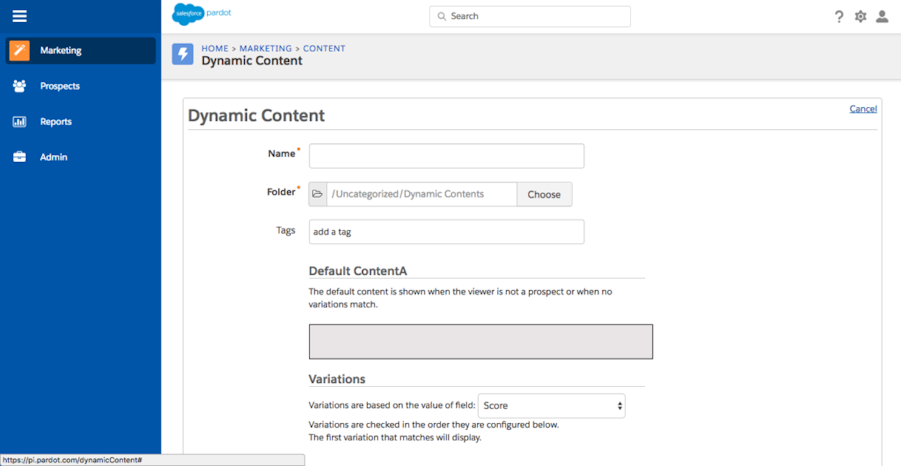
Marketing Cloud Account Engagement in context
Within the Salesforce marketing ecosystem, Account Engagement is generally used by companies that sell to other businesses rather than consumers.
B2B buying journeys often involve multiple stakeholders and can take weeks or months to complete. As a result, marketing activity focuses less on immediate conversions and more on building relationships over time. Account Engagement helps manage this process by tracking prospect interactions, automating follow-up communications, and prioritising leads for sales teams.
For example, a business might use Account Engagement to capture leads through website forms, track which content those prospects engage with, and automatically send targeted emails that guide them through the buying journey. As prospects become more engaged, they can be scored and passed to sales when they are ready for a conversation.
Why Marketing Cloud Account Engagement?
Marketing Cloud Account Engagement helps organisations bring marketing and sales activity closer together by enabling marketers to:
capture and track new leads from websites and campaigns
nurture prospects through automated email programs
score and grade leads based on engagement and profile fit
prioritise the most qualified prospects for sales teams
measure marketing’s contribution to pipeline and revenue
improve collaboration between marketing and sales departments
For B2B companies, these capabilities help ensure that marketing efforts directly support revenue generation rather than operating separately from the sales process.
How it works
Marketing Cloud Account Engagement supports the full lifecycle of B2B marketing automation.
Typical workflows include:
Lead capture – Prospects submit forms, download resources, or register for events
Prospect tracking – The platform records interactions with emails, web pages, and content
Lead scoring and grading – Prospects are ranked based on engagement and suitability
Lead nurturing – Automated campaigns guide prospects through the buying journey
Sales handoff – Qualified leads are passed to sales through Salesforce CRM
Reporting and analytics – Marketing teams track campaign performance and pipeline impact
Because the platform integrates closely with Salesforce CRM, marketing and sales teams can see the same prospect data and engagement history, which then informs sales engagements.
Comparisons
Account Engagement vs Marketing Cloud Engagement
Marketing Cloud Account Engagement focuses on B2B marketing automation, particularly lead generation and nurturing.
Marketing Cloud Engagement focuses on multi-channel customer engagement, typically used in B2C marketing strategies.
Account Engagement vs Marketing Cloud
Marketing Cloud is the broader portfolio of Salesforce marketing products.
Account Engagement is one product within that portfolio, designed specifically for B2B marketing automation.
Account Engagement vs traditional email marketing
Traditional email tools send campaigns to lists without deeper engagement tracking.
Account Engagement goes further by tracking behaviour, scoring prospects, and aligning marketing activity with sales outcomes.
FAQs
What is Marketing Cloud Account Engagement used for?
It is used to automate B2B marketing activities such as lead generation, nurturing, and marketing-to-sales handoff.
Is Marketing Cloud Account Engagement the same as Pardot?
Yes. Pardot was the original product name before Salesforce renamed it Marketing Cloud Account Engagement.
Who typically uses Account Engagement?
B2B companies with longer sales cycles that need structured lead nurturing and marketing automation.
How does Account Engagement integrate with Salesforce?
It connects directly with Salesforce CRM so marketing and sales teams can share prospect data and engagement insights.
Can Account Engagement support account-based marketing?
Yes. The platform supports strategies such as account-based marketing, lead scoring, and personalised nurturing campaigns.
Capabilities & More information
Capabilities of Salesforce
Common use cases include:
- Automated lead scoring and grading to prioritise sales efforts
- Email marketing and automation tools to nurture leads
- Integration with Salesforce CRM for seamless lead handoff
- Personalised content delivery based on customer behaviour
- Customisable workflows to automate repetitive tasks
- Detailed campaign reporting and ROI tracking
- Lead management tools for sales and marketing alignment
- Advanced segmentation for targeted outreach
Learn more about Salesforce
Resources and further reading...