What is Salesforce Platform?
Salesforce Platform is the technology layer that powers the entire Salesforce ecosystem. It includes configuration tools, automation features, APIs, and development frameworks that let businesses tailor Salesforce cloud products, such as Sales Cloud, Service Cloud, and Marketing Cloud, to their unique processes. Previously called force.com, Salesforce Platform is what lets you build custom apps and integrate external systems without replacing the core Salesforce CRM.
Also known as:
• Salesforce PaaS (Platform as a Service)
• force.com (legacy name)
• Platform
Not to be confused with:
• Salesforce (the brand and CRM ecosystem)
• Individual Salesforce products (Service Cloud, Marketing Cloud, etc.)
• AppExchange third-party apps
Salesforce Platform in context
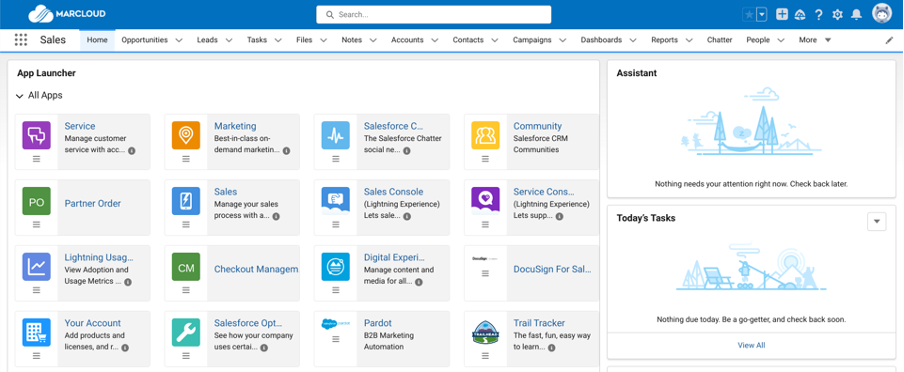
Salesforce Platform is not a separate product that users log into; it is the underlying platform that enables Salesforce products to function and be customised. While products like Sales Cloud or Service Cloud provide ready-made features, Salesforce Platform is what allows customers to extend, customise, and connect those products to fit their own processes and solve specific business challenges.
This means businesses are not limited to out-of-the-box Salesforce functionality. They can create custom objects, automate workflows, build internal applications, and integrate external systems, all within the same secure Salesforce environment.
Thanks to its low-code capabilities, customers can connect with third-party systems or build their own apps and websites, with less time and complexity.


Why Salesforce Platform?
Salesforce Platform matters because it turns a “CRM” into a business system.
In practical terms, it allows organisations to:
Build workflows that fit how teams work in reality
Create custom applications that integrate deeply with Salesforce data
Automate work without manual intervention
Connect Salesforce to external systems like ERPs and data warehouses
Deploy solutions that scale with the business
Without the Platform layer, that sort of flexibility simply isn't possible, especially across multiple business functions.
How Salesforce Platform works
At a high level, Salesforce Platform provides tools and frameworks that let you shape both data and behaviour within Salesforce.
Data model flexibility – You can add custom objects, fields, and relationships to represent unique business information.
Automation tools – Click-based automations (e.g., Flow Builder) let you automate approvals and updates without code.
Programmatic extension – Developers can write Apex code or Lightning Web Components when deeper custom logic is needed.
Integration and APIs – Secure APIs let Salesforce talk to other systems, sync data, and trigger external workflows.
Security & governance – Built-in roles, profiles, and permission sets let you control access at a detailed level.
These elements let your Salesforce org move beyond “out-of-the-box CRM” into a platform that supports your entire customer ecosystem.
Comparisons
Salesforce Platform vs Salesforce
Salesforce (the brand) refers to the suite of product experiences like Sales Cloud and Service Cloud, but is also used interchangeably to refer to the core Salesforce CRM software.
Salesforce Platform refers to the underlying application layer that lets you extend all of those products through customisation, integration, and automation.
Salesforce Platform vs AppExchange apps
Platform capabilities let you build logic and models in-house.
AppExchange apps are pre-built packages you install to add functionality created by third parties.
FAQs
Is Salesforce Platform the same as Salesforce CRM?
No. Salesforce CRM is a front-end product used for managing customer relationships and supporting sales and service teams. Salesforce Platform is the underlying technology layer that enables customisation and extension across all Salesforce products.
Do I need developers to use Salesforce Platform?
Not necessarily. Many effective automations can be built using point-and-click tools like Flow Builder. However, developers are essential when you need deeper logic or custom UI components.
Does Salesforce Platform include automation tools?
Yes. Tools like Flow Builder and Process Builder are part of the platform and let you automate business processes without code.
Can Salesforce Platform connect to external systems?
Yes. Salesforce Platform includes robust APIs and integration frameworks that let it securely connect with ERPs, marketing systems, and other enterprise applications.
Is Salesforce Platform included with Sales Cloud?
It depends on your licensing. Many Salesforce editions include platform capabilities, but specific access levels (e.g., developer tools) may vary. It’s best to review your licence entitlements before assuming full platform access.
Can I build mobile-friendly apps with Salesforce Platform?
Yes. Custom apps and Lightning pages built on the platform work in both Lightning Experience and the Salesforce mobile app.
Capabilities & More information
Capabilities of Salesforce
Common use cases include:
- Custom data modelling – Define business data structures that reflect how you operate
- Automation – Use tools like Flow Builder and Process Builder to automate business logic
- App building tools – Create custom apps using Lightning App Builder and Apex
- API integration – Connect external systems and data sources securely
- Security & compliance – Manage user access and data protection at enterprise scale
- AppExchange – Compose platform logic with third-party extensions
- Versioning & deployment tools – Support controlled updates across environments
Learn more about Salesforce
Resources and further reading...